
Corticosteroids profoundly alter the metabolism of salt, sugar, calcium, and proteins. Adjusting your diet while on cortisone is not just about “eating less salt”: each side effect requires a specific nutritional adjustment, the intensity of which depends on the dose and duration of treatment.
Hidden sodium in corticosteroids: sources not shown on the plate
Water and sodium retention is one of the first measurable effects of corticosteroid therapy. Limiting table salt and prepared dishes is a well-known reflex. What is less known is that certain pharmaceutical forms of the medication itself contain sodium.
The French leaflet for Prednisolone Arrow 20 mg (updated on August 31, 2026) states that a single effervescent tablet contains 25.99 mg of sodium. For a patient taking several tablets a day, this intake adds to that from food. Effervescent forms warrant checking with the pharmacist, especially in cases of hypertension or edema.
| Sodium Source | Indicative Intake | Note |
|---|---|---|
| Effervescent prednisolone tablet (20 mg) | 25.99 mg per tablet | Check the prescribed pharmaceutical form |
| Classic bread (one serving) | Variable, often high | Prefer salt-free or reduced-salt bread |
| Hard cheese (30 g) | Variable depending on type | Aged cheeses concentrate sodium |
| Industrial prepared dishes | Very variable | Always read the labels |
Finding all the information on Conseils Cuisine helps to better visualize the food families to monitor on a daily basis.
Proteins and calcium under corticosteroid therapy: two linked priorities
Corticosteroids accelerate muscle wasting and increase urinary calcium loss. These two mechanisms require simultaneous review of protein and calcium intake, not one without the other.
Animal and plant proteins at every meal
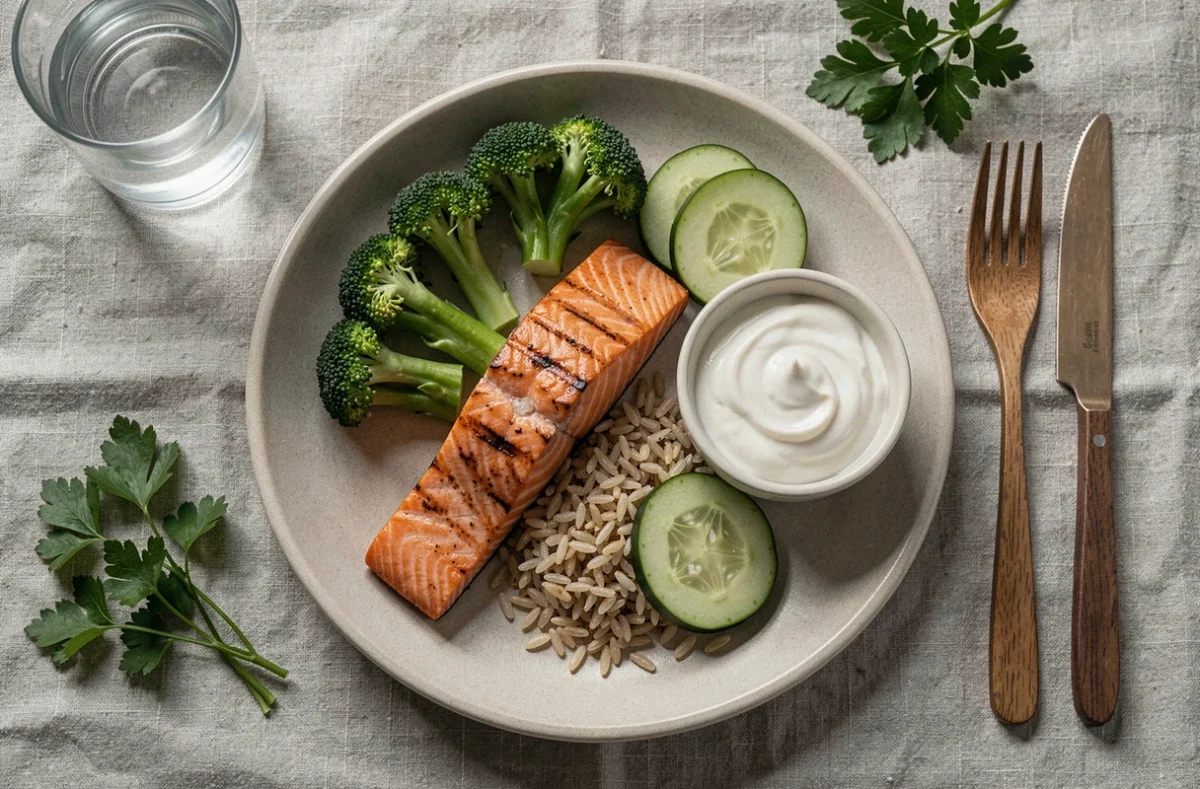
Meat, fish, eggs, or legumes should be included at lunch and dinner. Muscle wasting induced by corticosteroids occurs even at low doses during prolonged treatment. Spreading protein intake throughout the day promotes better muscle synthesis than a single rich meal.
Dietary calcium before any supplementation
Dairy products remain the most bioavailable source of calcium. Three servings a day (yogurt, milk, cottage cheese) cover a large part of the needs. However, aged hard cheeses pose a dilemma: rich in calcium, they are also high in sodium.
Choosing cottage cheese or plain yogurt over Comté or Emmental helps maintain calcium intake without worsening salt retention. For lactose-intolerant individuals, mineral waters rich in calcium and green vegetables (broccoli, kale) are alternatives.
A clinical update published on September 1, 2026, reminds us that for a prednisolone dose of at least 7.5 mg per day for at least three months, the NOGG 2024 and ACR 2022 recommendations consider protective management of bone. Diet alone may not be sufficient in these cases: a consultation with the doctor is necessary.
Sugar, potassium, and fats: three adjustments often miscalibrated
Corticosteroids increase blood sugar levels, which exposes patients to the risk of corticosteroid-induced diabetes. The temptation is to eliminate all sugars, but the useful response is more nuanced.
- Limit added sugars (pastries, sodas, candies) and consume whole fruits rather than juices, as the fibers in the fruit slow down glucose absorption.
- Prefer whole grains (brown rice, whole pasta, whole bread) which have a lower glycemic index than their refined versions.
- Consume at least three servings of vegetables per day, which provide fiber, potassium, and micronutrients without significant glycemic load.
Potassium deserves special attention. Corticosteroids increase its urinary loss, and foods that are naturally rich in it (banana, avocado, legumes, spinach) can be integrated into daily meals. Any potassium supplementation must be validated by a biological assessment, as it may be inappropriate for individuals with renal insufficiency or those taking certain medications.
Regarding fats, corticosteroids disrupt the lipid profile with a possible increase in blood cholesterol. Reducing saturated fats (processed meats, excessive butter, fried foods) in favor of vegetable oils (olive, canola) and fatty fish helps limit this effect.
Digestive tolerance and timing of intake: an underestimated factor
Taking corticosteroids during a meal is not only a nutritional logic. Taking them with food improves the digestive tolerance of the medication, reducing the risk of gastric pain and nausea.
A structured breakfast (source of protein, whole grain, dairy product) provides a good support for morning intake, which corresponds to the natural peak of cortisol in the body. This synchronization is often recommended by doctors to limit disruptions in hormonal rhythm.

Dietary adaptation while on cortisone should be viewed as a coherent whole rather than a list of prohibitions. The prescribed dose, duration of treatment, and patient history (diabetes, hypertension, osteoporosis) determine the level of rigor needed. Regular follow-up with the doctor and, if possible, a dietitian remains the best way to calibrate these adjustments without falling into unnecessary restrictions.