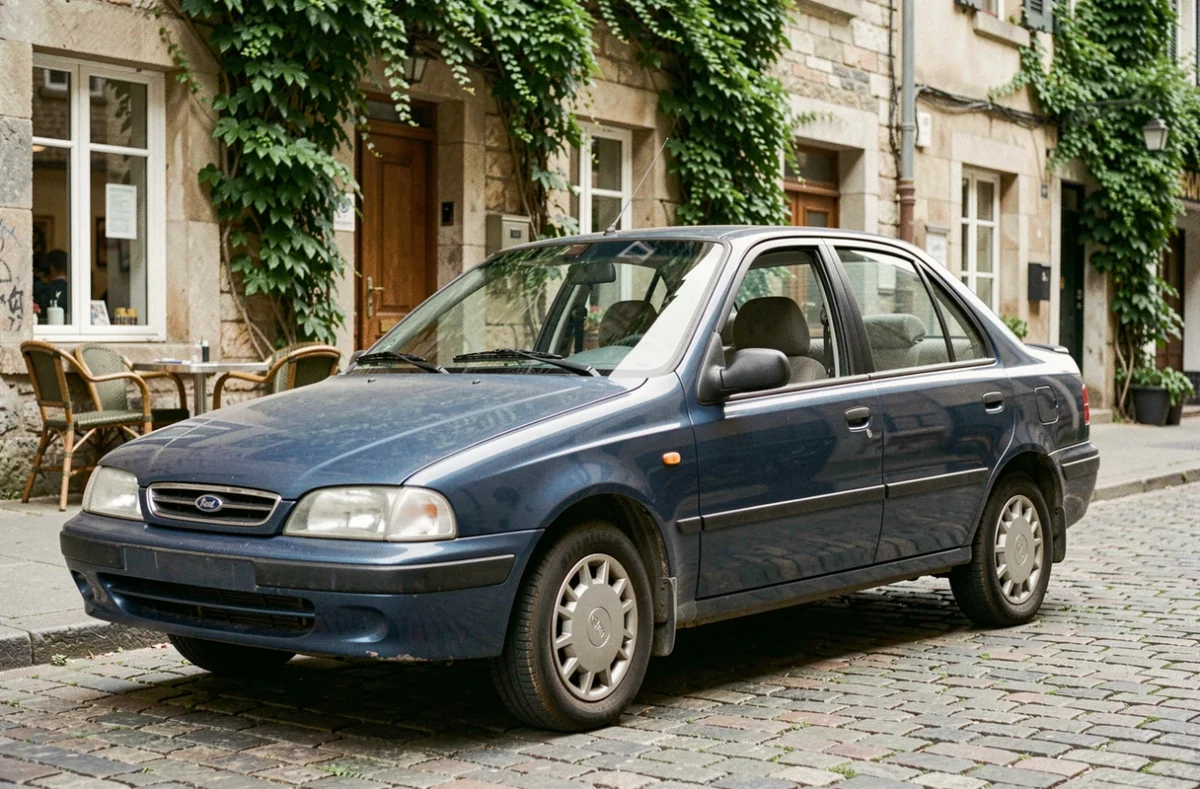
Daewoo Motors is a South Korean automobile manufacturer whose activity spanned three decades, from the 1980s to the late 2000s. Originating from the Daewoo Group conglomerate founded by Kim Woo-Choong in 1967, the manufacturer produced vehicles under license before developing its own models, and then gradually disappeared after its acquisition by General Motors in 2002.
Licensed Platforms: Daewoo’s Technical Foundation Before Independence
Before designing its own cars, Daewoo operated for over twenty years as an assembler of foreign models. The company that would become Daewoo Motor first assembled Nissan Bluebirds under the Saenara brand as early as 1962, followed by Toyota Coronas between 1966 and 1972.
The establishment of a joint venture with General Motors in 1972 (GM Korea, later renamed Saehan) shifted production towards Opel and Holden platforms. Holden Toranas and Opel Rekord Ds were assembled in South Korea from that period onward.
In 1983, Saehan officially adopted the name Daewoo, marking its fifth name change. Until 1986, nearly all vehicles were assembled from imported parts. This technical dependence explains why the early Daewoo models closely resembled European Opels, both in design and in their engines. The technical specifications available on the Dae Woo Automobile website trace this mechanical lineage between the different generations.
Daewoo Models of the 1990s: Espero, Lanos, and Nubira in the European Market
Daewoo’s entry into Europe in the 1990s was based on a range built with the help of design offices like Italdesign. The Korean manufacturer gradually moved away from Opel derivatives to offer vehicles designed and calibrated for the European market.
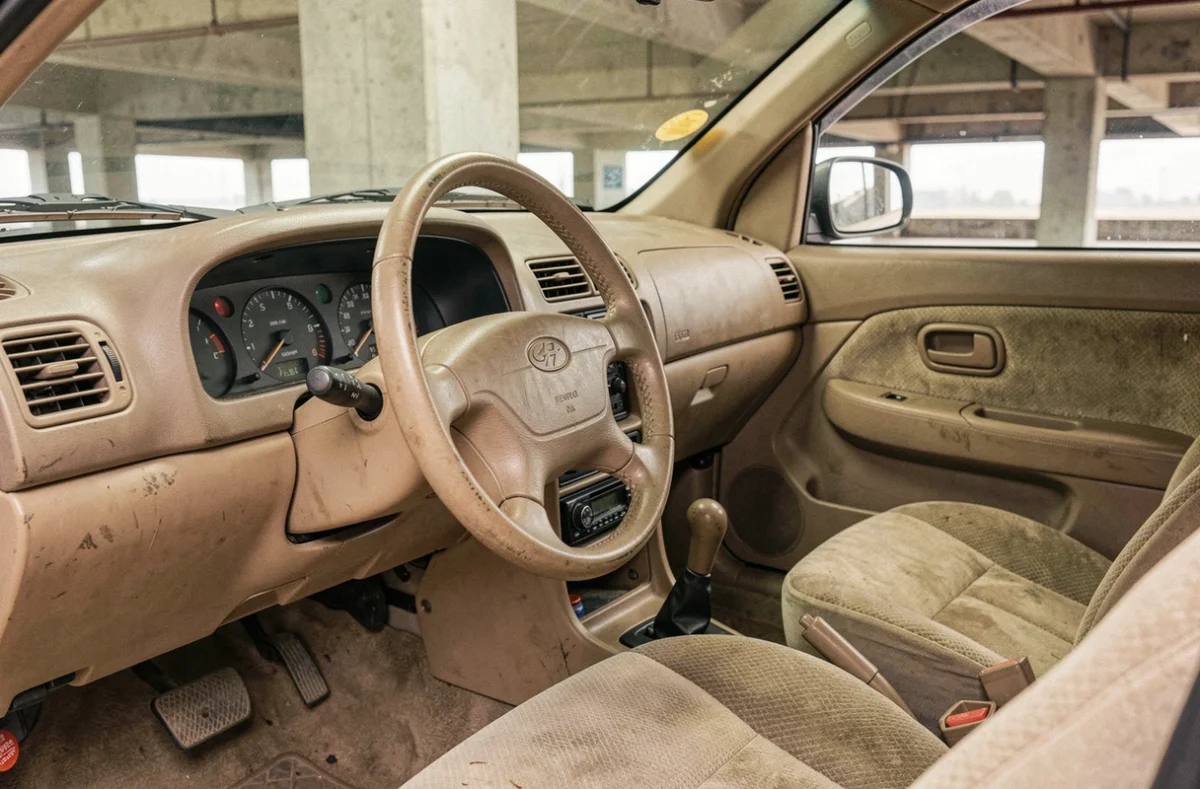
Three models structured this commercial offensive:
- The Espero, a mid-size sedan launched at the beginning of the decade, positioned in an aggressive price segment against European compacts. Its design by Bertone gave it a more modern appearance than its price would suggest.
- The Lanos, a subcompact that appeared in 1997, designed to compete with entry-level city cars. It served as the entry model to the brand in most markets.
- The Nubira, a family compact positioned between the Lanos and the Leganza, aimed directly at the segment of versatile sedans like the Renault Mégane or Opel Astra.
The Leganza completed the range at the top, as a mid-size sedan with relatively generous equipment for its price. The low pricing strategy was the main selling point for the brand in these markets.
Daewoo Matiz: The City Car that Defined the Brand
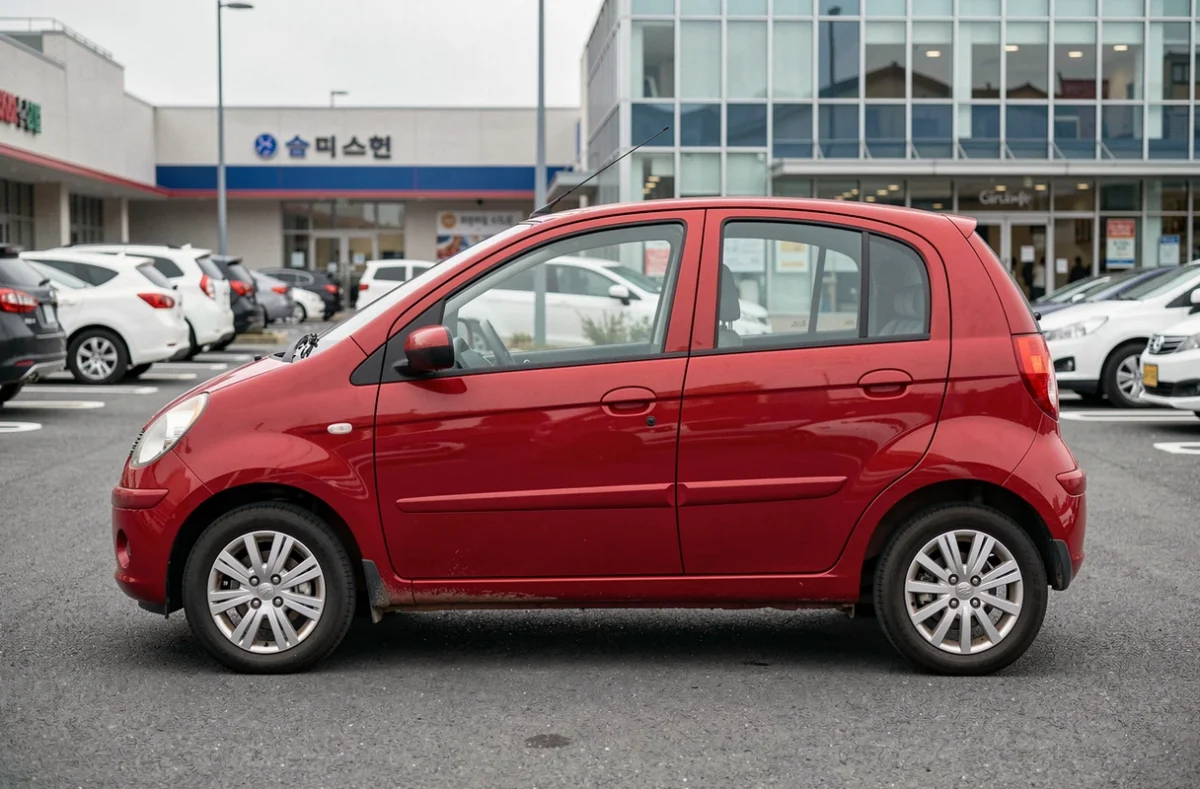
The Matiz holds a special place in Daewoo’s history. Designed by Giorgetto Giugiaro at Italdesign, this compact city car launched in the late 1990s became the best-selling and most recognizable model of the brand.
Its small size, low price, and modest fuel consumption made it a vehicle well-suited for daily urban use. In Eastern and Southern European markets, the Matiz captured a clientele that did not have access to comparable European city cars.
The Matiz survived the disappearance of Daewoo. After the acquisition by General Motors, it was rebranded as the Chevrolet Spark and marketed under that name in many countries. In South Korea, the Matiz Creative followed the same path during the definitive removal of the Daewoo brand from the Korean market in 2011.
Bankruptcy of 1999 and Acquisition by General Motors
The Asian financial crisis of 1997 weakened the entire Daewoo group. The conglomerate, indebted by several tens of billions of dollars, was declared bankrupt on November 1, 1999. The automotive branch, Daewoo Motor, did not escape this collapse.
In 2002, General Motors acquired most of the automotive assets to create GM Daewoo Auto & Technology. Existing models were gradually rebranded under the Chevrolet name starting in 2005 in Europe. The Daewoo brand disappeared from the European market in the early 2010s.
In South Korea, GM Daewoo took the name GM Korea in 2011, and the Daewoo brand was replaced by Chevrolet in the domestic market. This transition marked the end of several decades of existence under the Daewoo name in the manufacturer’s home country.
Daewoo’s Industrial Legacy in Uzbekistan and the Ravon Brand
A lesser-documented aspect of Daewoo’s history concerns the continuation of its production in Uzbekistan. The Asaka plant, built during the Daewoo era, continued to produce vehicles under the UzDaewooAuto and then GM Uzbekistan brands.
Starting in 2015, several models derived from the old Daewoo platforms were marketed under the Ravon label for export markets. The Ravon Gentra, Nexia R3, and R4 are not new creations: they are direct evolutions of the Lacetti, Aveo, and Cobalt platforms, produced based on the GM technical foundation inherited from Daewoo.
This Uzbek industrial continuity represents the last tangible trace of Daewoo’s production apparatus. The vehicles coming out of Asaka still share components and architecture designed during the time when the Korean manufacturer was developing its own models with the help of European engineers.
The trajectory of Daewoo illustrates a recurring pattern in the Asian automotive industry of the 1990s: rapid growth through pricing, aggressive international expansion, and then absorption by a global group after a financial crisis. The technical platforms developed by Daewoo continue to roll under other names, from Seoul to Tashkent.