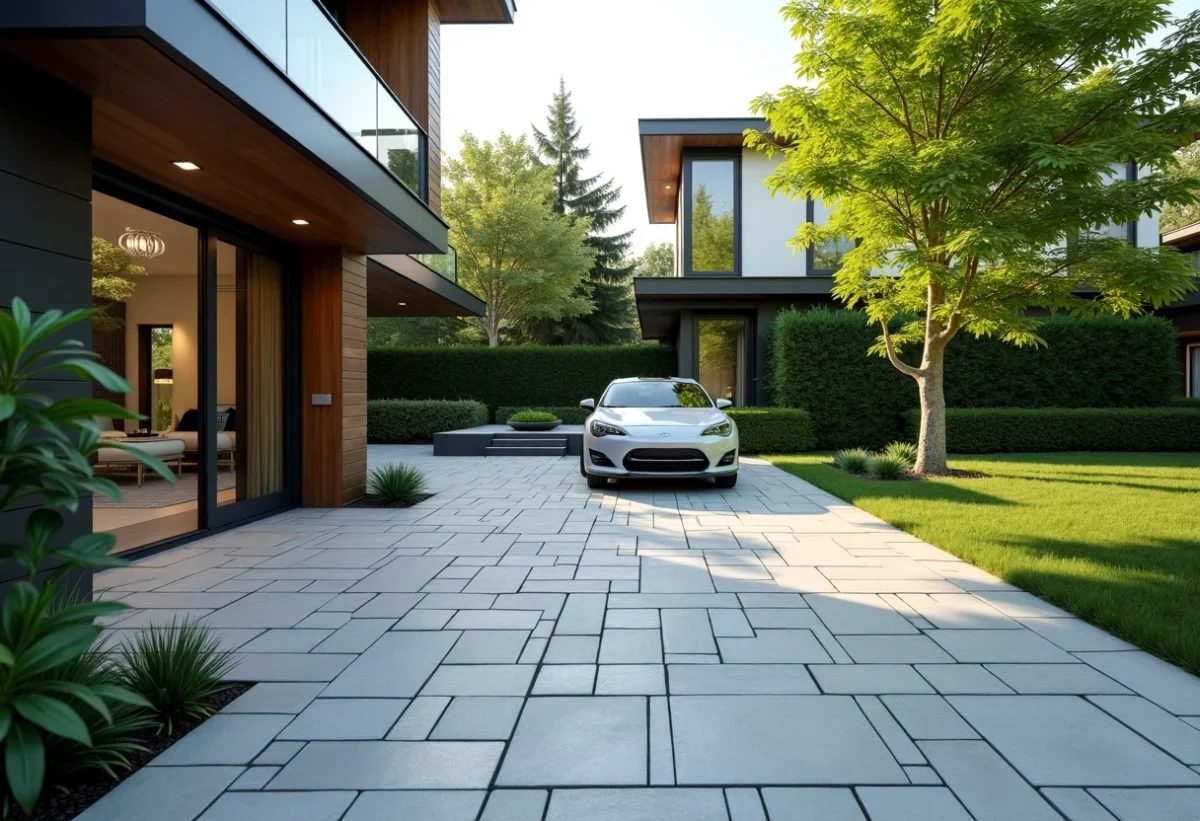
Choosing the right surface for your parking space can transform a simple parking area into a functional and aesthetic zone. The options are varied, ranging from interlocking pavers to asphalt, concrete, and gravel. Each of these materials offers specific advantages in terms of durability, maintenance, and cost.
For example, interlocking pavers are known for their robustness and attractive visual appeal, while asphalt stands out for its ease of installation and relatively affordable cost. Therefore, the choice of surface will depend not only on aesthetic preferences but also on budget constraints and the climatic conditions of the region.
The different types of surfaces for a parking space
Choosing the right surface is essential to ensure the durability and aesthetics of your parking area. Several materials stand out due to their specific properties.
Interlocking pavers
Interlocking pavers, whether made of concrete or stone, are highly valued for their strength and aesthetic appeal. Their installation is simple, and they require minimal maintenance. They also allow for better management of rainwater due to their permeability.
Decorative gravel
Decorative gravel has the advantage of being economical and easy to install. It offers good permeability and a natural look, ideal for driveways or parking lots. However, it requires regular maintenance to prevent the gravel from spreading.
Concrete
Concrete comes in several finishes: smooth concrete, brushed concrete, or exposed or brushed concrete parking. These options allow for a wide variety of textures and appearances. Concrete is an extremely durable material, capable of supporting heavy loads and offering a long lifespan.
Permeable surfaces
To meet the requirements of the Alur law, which mandates solutions for rainwater management, permeable surfaces are an excellent solution. They include permeable concrete, permeable asphalt, and vegetated flooring. These materials allow for natural water infiltration, thereby reducing the risk of flooding and environmental impact.
- Decorative gravel: economical, permeable, but requires regular maintenance.
- Interlocking pavers: robust, aesthetic, and allow for good rainwater management.
- Concrete: several possible finishes, very durable.
- Permeable surfaces: eco-friendly solutions for rainwater management.
Depending on your specific needs, budget, and environmental constraints, each type of surface presents distinct advantages. Consider the characteristics of each option to make an informed choice. 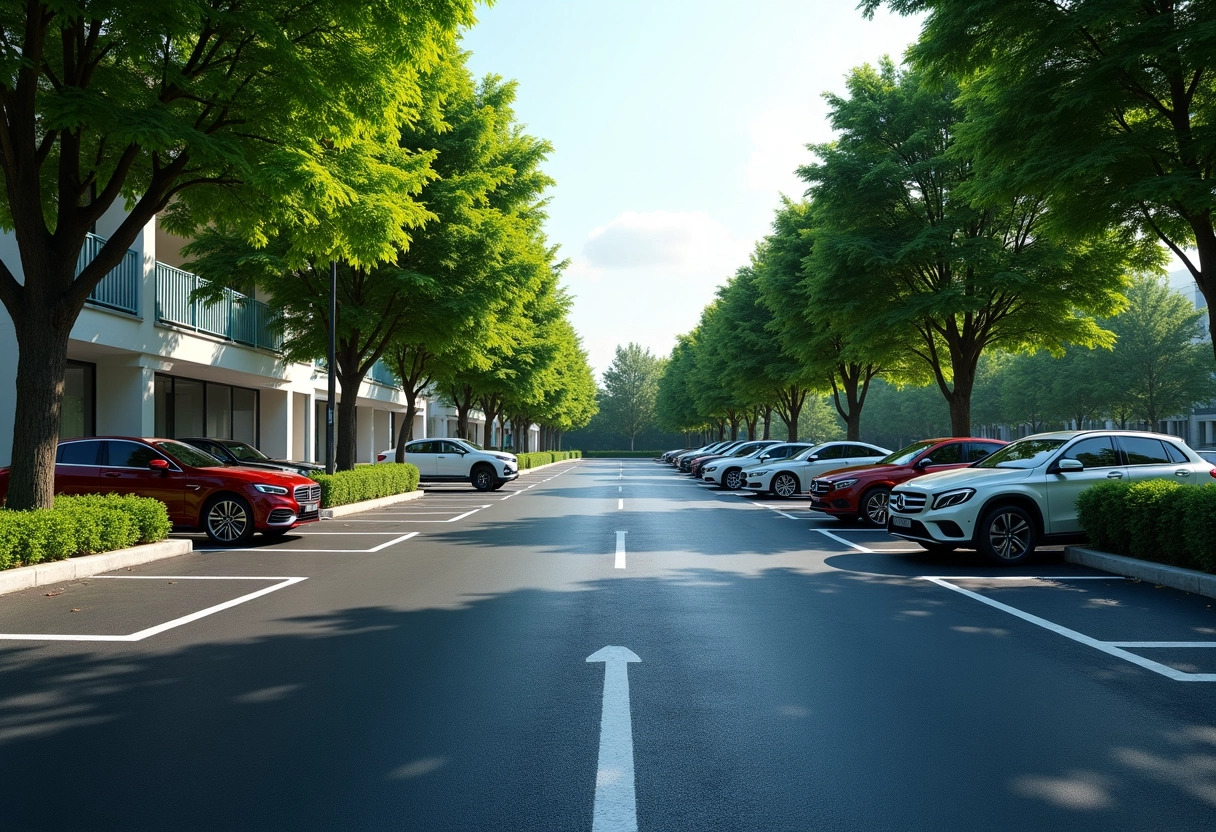
Selection criteria to optimize your parking space
Excavation and stone laying
Before choosing the surface, excavation is a crucial step. It ensures a stable and durable foundation for your parking space. The stone laying follows this step, preparing the ground for the surface installation. Properly executed stone laying guarantees soil stability and reduces the risk of subsidence.
Permeable surfaces and Alur law
Meeting environmental requirements is now fundamental. The Alur law mandates the use of permeable surfaces to promote rainwater infiltration. Permeable concrete, permeable asphalt, and vegetated flooring are solutions to consider. These materials allow for effective water management, thus reducing environmental impact.
Finishes and technical details
The finishes play a key role in the aesthetics and functionality of your parking area. They may include:
- The installation of curbs or walls to delineate the space.
- Management of water drainage to prevent flooding.
- Automation of the gate for convenient and secure access.
Take these criteria into account to optimize your parking space. Every aspect, from excavation to finishes, contributes to the durability and efficiency of your setup.