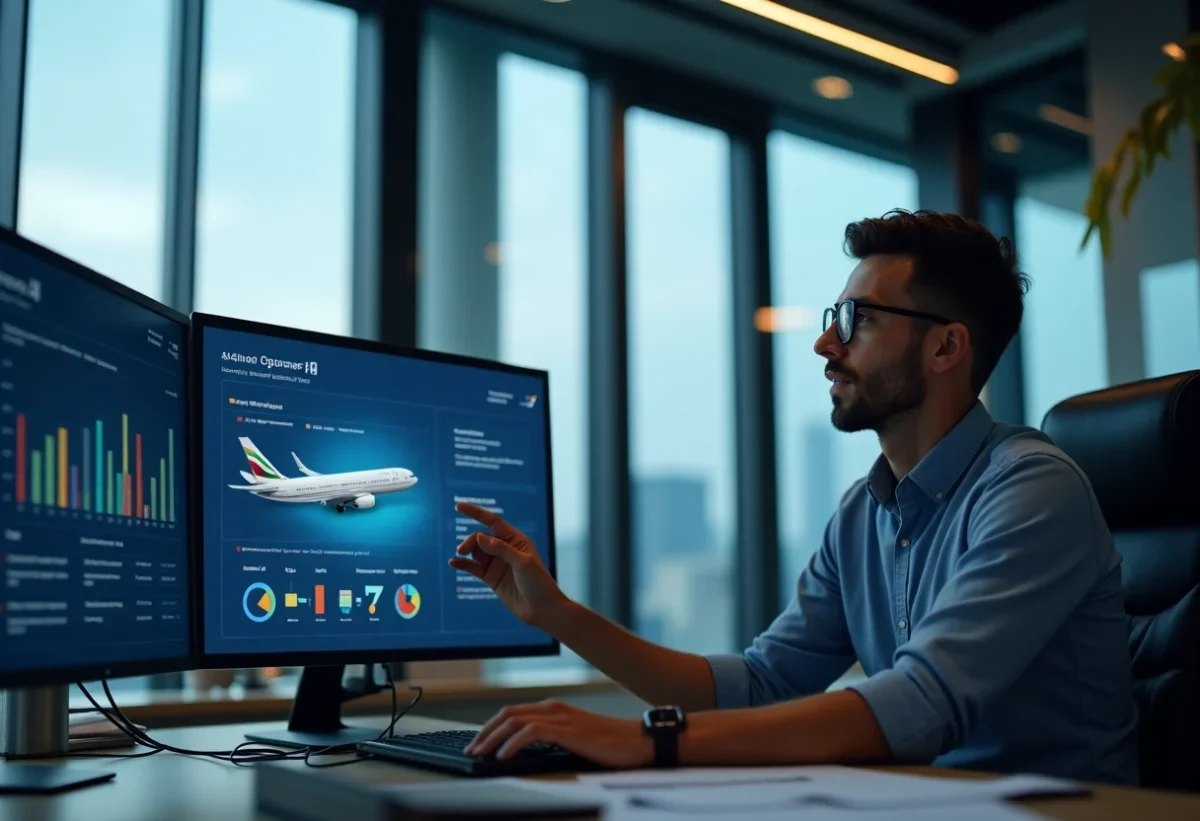
The airline industry, with its thousands of employees spread across the globe, faces unique challenges in human resource management. Airlines must juggle complex schedules, strict regulations, and significant cultural diversity. To meet these demands, digital tools are becoming essential.
These technological solutions allow for the optimization of crew rotation planning, management of training in compliance with international standards, and ensure smooth communication between different departments. Thanks to these innovations, airlines can not only improve their operational efficiency but also provide a more harmonious work environment for their employees.
Digital tools for effective human resource management
Airlines, such as Air France-KLM, are increasingly integrating digital platforms to enhance their operational efficiency. These tools centralize information and facilitate communication between different departments, particularly through big data and cloud technologies.
Integration of artificial intelligence
The use of artificial intelligence is becoming widespread in the aviation industry for various aspects of human resource management. For example:
- Predictive maintenance of equipment, used by Airbus, which allows for anticipating failures and optimizing maintenance operations.
- Lufthansa’s AI platform analyzes passenger data to personalize services and improve the customer experience.
Mobile applications and IoT
Mobile applications, such as those developed by Intralignes Air France, play a fundamental role in optimizing daily operations. They enable employees to easily access necessary information and communicate more effectively. The use of IoT sensors by Air France-KLM to monitor engine performance in real-time is another example of integrating advanced technologies to ensure the safety and efficiency of flights.
Training and skill development
Skill management and continuous training are also optimized through tools like those used by LISI Aerospace with Mercateam. These platforms allow for proactive management of talents and planning for future skill needs, aligned with the GPEC (Forecasting Employment and Skills Management) strategy.
The use of these digital tools, such as those employed by ipn Air France, demonstrates the growing importance of digital transformation in human resource management within the aviation sector. These technologies not only enhance operational efficiency but also improve employee and passenger satisfaction.
Strategies for adopting and securing HR technologies
Digital transformation is reshaping the aviation sector by integrating advanced technologies into human resource management. To optimize this transition, airlines must follow specific strategies to maximize the efficiency and security of their operations.
Training and awareness
Continuous training for employees is essential to ensure the successful adoption of new technologies. GPEC (Forecasting Employment and Skills Management) allows for anticipating future skill needs and organizing tailored training programs. The Mercateam platform, used by LISI Aerospace, is a concrete example.
- Continuous training programs
- Cybersecurity awareness sessions
Data protection
Data security is a major issue in the context of digital transformation. The cloud provides optimal protection for sensitive information against cyberattacks. Companies must comply with the standards of the International Air Transport Association (IATA) and ISAGO audits to ensure secure data management.
| Entity | Role |
|---|---|
| Cloud | Ensures data security |
| ISAGO | Conducts security audits |
Use of artificial intelligence
The integration of artificial intelligence (AI) enhances operational efficiency. Lufthansa uses an AI platform to analyze passenger data, while Delta Air Lines has invested in an ERP system developed by SAP to optimize its internal processes.
These strategies for adopting and securing HR technologies are crucial for ensuring an effective and secure work environment, thus contributing to the digital transformation of the aviation sector.