
Do “purebred” and “pedigree” dogs mean the same thing? In practice, these terms refer to distinct administrative and genetic statuses that are often confused when buying a puppy. An LOF birth certificate, a final pedigree and physical appearance do not offer the same guarantees. Understanding these differences helps you assess what you are actually buying.
LOF birth certificate, final pedigree and confirmation: three documents, three levels of proof
| Document | What it certifies | When it is issued | Main limitation |
|---|---|---|---|
| LOF birth certificate | Parentage declared by the breeder; provisional registration with the LOF | At the puppy’s birth | Does not prove that the dog meets its breed standard |
| Final pedigree | Official ancestry over several generations; permanent registration with the LOF | After confirmation by a judge | Does not constitute a health diagnosis |
| Ancestry DNA test | Estimated genetic similarity to the breeds in the laboratory’s panel | At any time, at the owner’s initiative | Does not replace LOF registration or a pedigree; results vary between panels |
A puppy can leave the breeder with an LOF birth certificate and never obtain a final pedigree. Confirmation, the step in which an expert checks that the adult dog meets the breed standard, is a separate process. A birth certificate is not a pedigree, and confusing the two is like treating a promise as an acquired title.
To explore the distinction between dog pedigrees and purebred dogs further, it is also important to understand that a pedigree provides information about ancestry, not the animal’s health. A responsible breeder will also provide the results of health screenings carried out on the parents (for hip dysplasia, eye conditions and heart disease, depending on the breed).
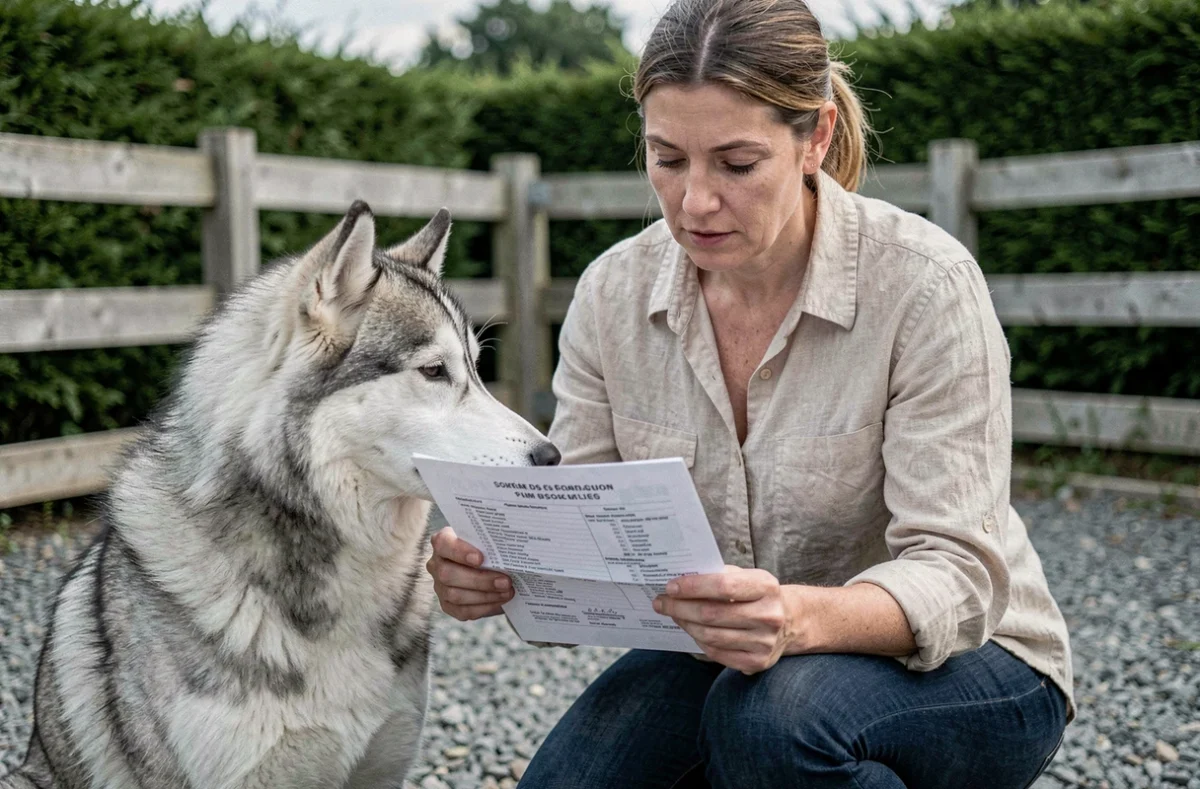
Dog sold as “purebred” without LOF registration: what buyers should check
A seller may describe a dog as “purebred” based on its appearance or the stated breeds of its parents. Unless LOF registration is confirmed by an official document, the dog cannot legally be described as “purebred” in France. This designation is reserved for animals registered in a recognized studbook.
If the documents provided are limited to a health record and an invoice, several checks are essential before completing the purchase:
- Ask for the identification number (microchip or tattoo) and check its registration in the I-CAD database, which lists the declared breed or the designation “breed appearance” or “type” if the dog is not registered with the LOF.
- Ask for the original LOF birth certificate if the seller claims the puppy is registered. This document bears a file number that can be verified with the Société centrale canine.
- Check that the certificate of commitment and knowledge has been signed and that the seven-day cooling-off period before transfer has been observed. In 2025, the Conseil d’État clarified that this period begins on the date the certificate is issued.
The absence of these documents does not mean the dog will make a poor companion. It does mean that the asking price should not be comparable to that of an LOF-registered purebred dog.
DNA testing: a supplement, not a substitute
Ancestry DNA tests estimate genetic similarity to the breeds represented in their databases. Results vary depending on the laboratory and the panels used, particularly for small contributions or genetically similar breeds. A test indicating “85% Australian Shepherd” is not equivalent to LOF registration and does not allow the animal to be officially classified as that breed.
These tests can help shed light on the likely behavioral profile of a mixed-breed dog or one of unknown origin, but they confer no administrative rights.
Pedigree and dog health: a common misconception when buying
One of the most widespread misconceptions is that a pedigree guarantees good health. A pedigree documents a lineage, not a medical history. A dog registered with the LOF and with four generations of recorded ancestors may still carry a hereditary disease if the breeding dogs have not been screened.
Breed clubs maintain databases of screening results (for hips, elbows, eyes and heart, depending on the breed). Asking for the parents’ results and checking them directly with the club is a more reliable precaution than skimming a pedigree.
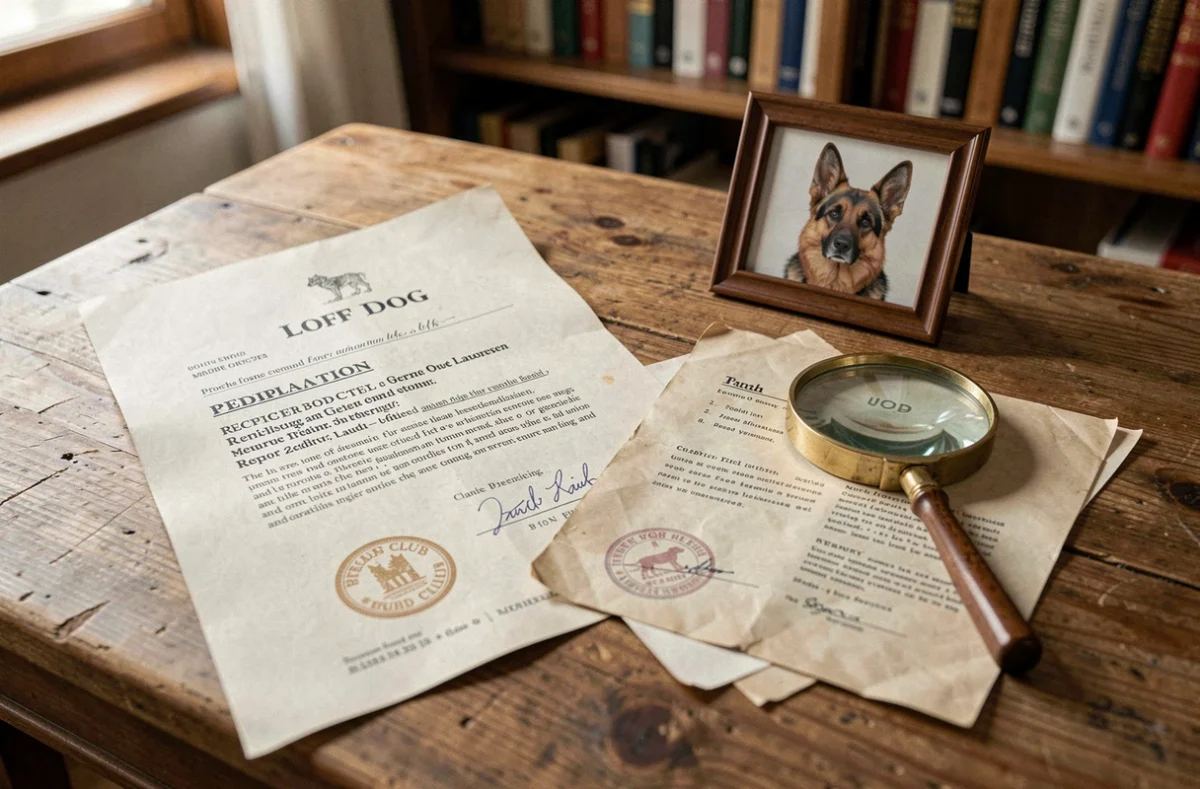
A pedigree remains a valuable genealogical tool for anticipating certain physical and behavioral traits. It can also help identify inbreeding in a lineage. But it never replaces veterinary examinations or breed-specific health screenings.
Purebred, breed type and appearance: terms that change a dog’s legal status
Under French law, the terminology used in sales documents has direct consequences. A dog registered with the LOF is “purebred.” A dog that is not registered but resembles a particular breed is described as having the “appearance” or “type” of that breed. This distinction affects the market price, the breeder’s obligations and the remedies available in the event of a dispute.
A breeder who sells a puppy as “purebred” without providing an LOF birth certificate may face prosecution for misleading commercial practices. Physical appearance alone is not enough to establish breed: dogs of different breeds can share similar traits, and puppies from the same litter can have very different builds that deviate considerably from the standard.
Before making any purchase, checking the documents matters more than judging by appearance. The LOF number, birth certificate, parents’ health-screening records and certificate of commitment form the minimum basis for a transparent transaction. A seller who refuses to provide these documents reveals the true status of the animal being offered.