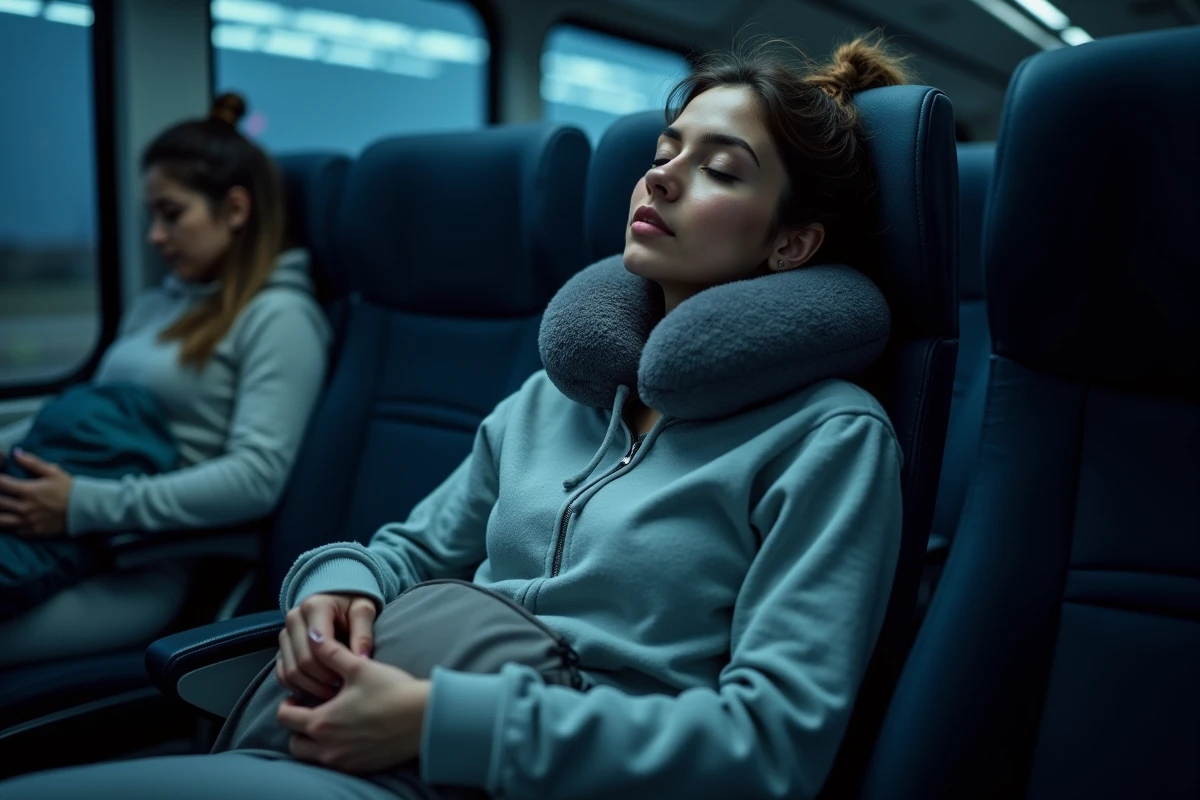
The BlaBlaCar buses that run at night cover long routes, often between six and twelve hours, on routes where no sleeper train alternative exists. The seat remains reclinable but does not convert into a bed, and the cabin is never completely dark. Sleeping on board is therefore a compromise between accumulated fatigue, personal equipment, and tolerance to ambient noise.
Actual amenities on BlaBlaCar night buses
The official site announces Wi-Fi and power outlets on most vehicles. In practice, on night routes, Wi-Fi is often inoperative or turned off during part of the journey. Power outlets and USB ports, on the other hand, generally remain functional, allowing for charging a phone or powering noise-canceling headphones.
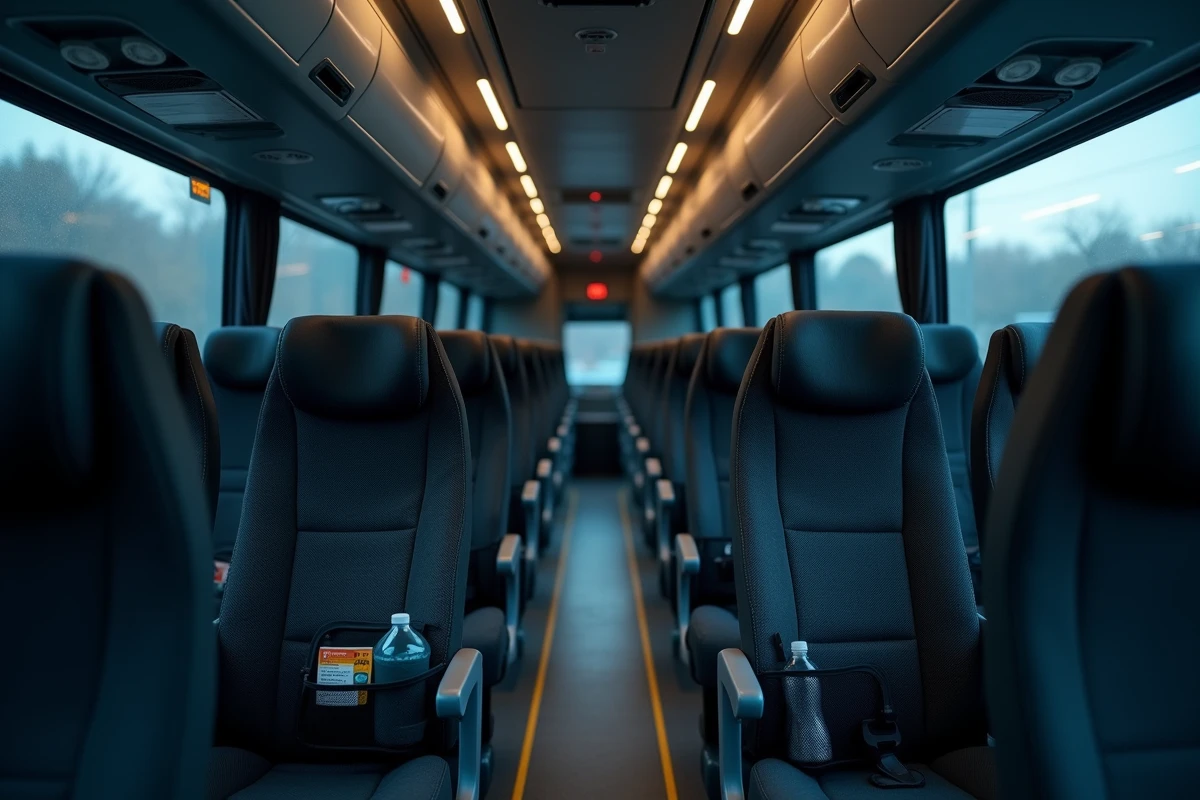
The seats have a reclining backrest by a few degrees, not a true sleeper mode. The angle achieved is sufficient for a semi-reclined position, but the lower back lacks support after several hours. No footrests are provided, and the space between rows varies depending on the vehicle chartered by the partner operator.
One detail that regular travelers note: the air conditioning runs all night, sometimes too loudly. The temperature in the cabin can drop significantly, making a warm garment or a light blanket almost mandatory to hope to fall asleep. Our review of the comfort of the BlaBlaCar night bus confirms this observation: the cold and residual light pose more problems than the seat’s recline.
Travel duration and sleep quality on night buses
The most common night routes connect cities like Paris-Brussels, certain routes to Germany, or France to Spain. These journeys often last between six and seven hours in a nearly direct version, with one or two technical stops. It is in this time frame that sleep works best.
Beyond eight hours, muscle fatigue accumulates. The seat, designed for a sitting journey, compresses the thighs and forces a change of position regularly. Journeys of six to seven hours in nearly direct routes offer the best sleep-discomfort ratio, because the body has time to go through a complete cycle before the pain becomes bothersome.
Intermediate stops break sleep. Each station involves partial lighting, opening of doors (influx of cold or warm air depending on the season), and boarding of passengers. On a twelve-hour journey with three or four stops, hoping for more than four consecutive hours of sleep is optimistic.
Personal equipment for sleeping on a BlaBlaCar bus
Night comfort depends more on what the passenger brings than on what the bus provides. Here are the items that really make a difference:
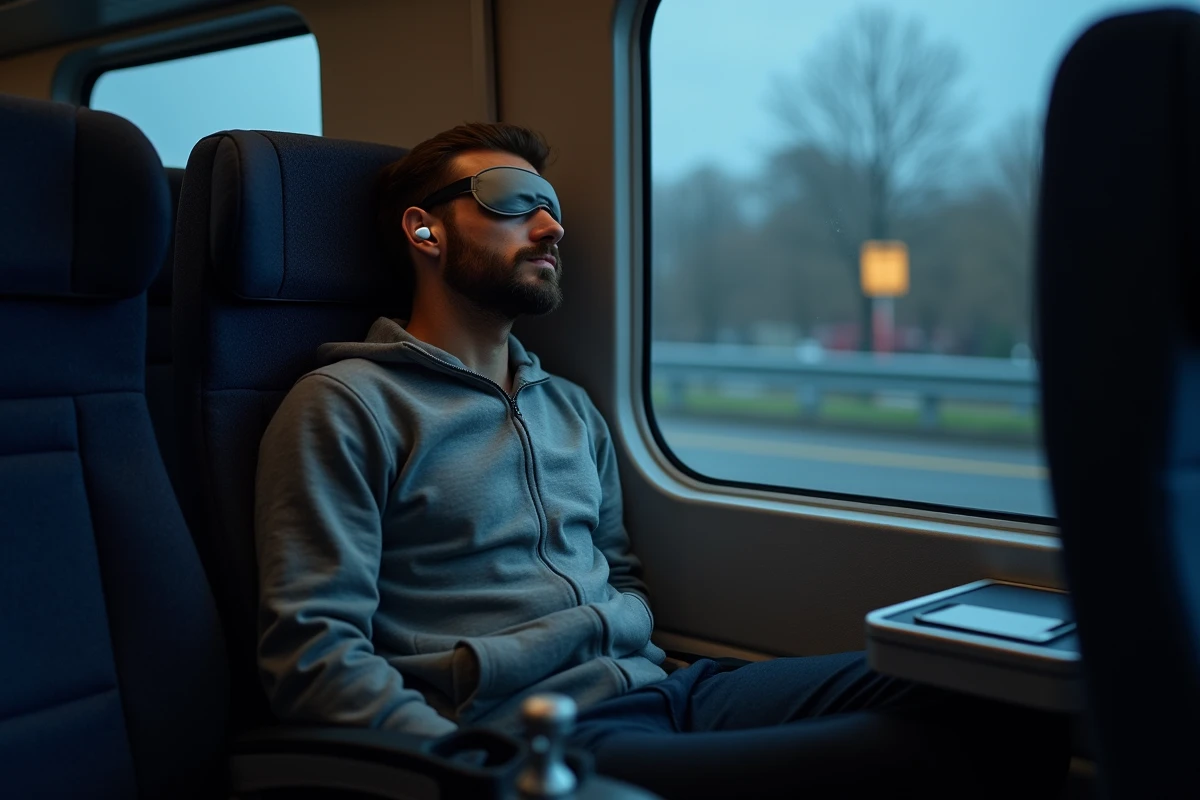
- Foam earplugs or active noise-canceling headphones: the engine, ventilation, and passengers create a continuous background noise around 65-70 decibels perceived, sufficient to prevent falling asleep without hearing protection.
- Opaque sleep mask: the aisle’s night lights and neighbors’ screens create constant light pollution. A well-fitted mask that also covers the nose makes a major difference.
- U-shaped neck pillow or rolled scarf: the backrest offers no lateral support for the head, and without support, the neck suffers jolts with every turn or braking.
- Additional clothing layers: a hoodie or a compact blanket, because the air conditioning cannot be adjusted individually.
A light snack and a bottle of water complete the kit. Breaks do not guarantee access to an open food point in the middle of the night.
BlaBlaCar night buses or night trains: pricing positioning
Since the revival of night trains in France and the rise of Nightjet in Europe, night buses are positioned on routes without sleeper alternatives. A bus ticket costs significantly less than a sleeper train berth, sometimes three to four times less on comparable routes.
The low price compensates for the absence of a bed, but not entirely. A passenger who arrives exhausted after a night on the bus and needs to book a room to recover cancels part of the savings. The calculation is especially justified for travelers who can sleep in a sitting position, or for those whose destination is not served by any night train.
When the night bus remains the logical choice
On the Paris-Brussels routes or certain lines to Spain, the night bus sometimes remains the only option for direct night transport. The rail network does not offer sleeper cars on these short or cross-border routes. The night bus fills a gap in the transport offering rather than competing with the train.
For a one-time trip, the discomfort is manageable with the right equipment. For regular night travel, accumulated fatigue pushes most travelers to return to the train or daytime carpooling, even at a higher price.
Sleeping properly on a BlaBlaCar night bus depends equally on the journey duration, the number of stops, and the equipment brought by the passenger. The bus provides only a seat and a power outlet. Everything else, sound insulation, darkness, warmth, neck support, relies on individual preparation.