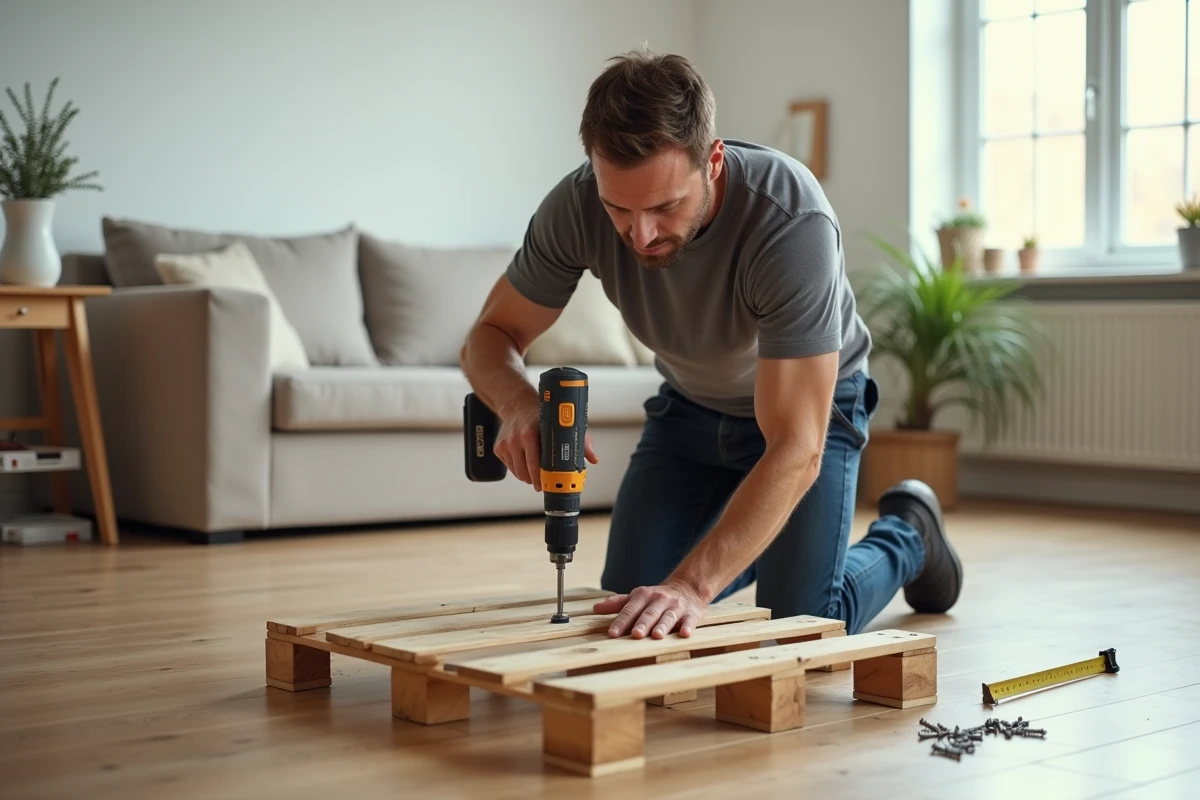
Fixing pallets to the ground is not just about driving a few screws into a slab. The choice of anchoring, the nature of the support, and local mechanical constraints determine the longevity of the installation. Here, we detail the technical points that make the difference between a stable pallet terrace and a structure that begins to fail in the first winter.
Pallet anchoring in moderate seismic zones: adapting the fixation to lateral vibrations
Seismic zones 2 and 3 in metropolitan France impose constraints that are often overlooked in DIY projects. A rigid anchoring with lag screws or welded brackets directly transmits vibrations to the wood, causing micro-cracks in the pallet blocks and eventually tearing the fixation apart.
In this case, we recommend semi-rigid fixation plates with elastomer washers. These washers absorb lateral movements without breaking the mechanical link between the pallet and the slab. The principle is simple: allow a few millimeters of play instead of locking the structure in a monolithic way.
The other viable option is chemical anchoring with a stainless steel threaded rod. Epoxy or vinylester resin forms an anchoring that works in tension and shear, where a standard expansion bolt only resists in tension. On a cracked concrete floor or a thin screed, this is the only reliable solution in a seismic zone.

To know how to fix pallets to the ground properly, you also need to consider the thickness of the slab. Below eight centimeters, a deep mechanical anchoring weakens the supporting structure, regardless of the seismic context.
Fixing pallets on concrete slabs: lag screws, bolts, or chemical anchoring
On a sound concrete slab, three families of fixation coexist. The choice depends on the thickness of the slab, the expected load, and exposure to the elements.
- Lag screws with hammered plugs: quick solution, suitable for lightweight pallets placed on a thick and sound slab. Pre-drilling with a concrete drill bit is mandatory, and the plug diameter must match the weight of the structure.
- Expansion cone bolt: powerful mechanical anchoring, reserved for slabs over ten centimeters. Be careful with the tightening torque; excess torque can cause the surface concrete around the hole to crack.
- Chemical anchoring (polyester, vinylester, or epoxy resin): the most versatile. Works on cracked concrete, hollow concrete, and offers significantly higher shear resistance than mechanical solutions.
In humid coastal climates, feedback from professionals indicates accelerated degradation of standard stainless steel screw fixings. Switching to chemical anchoring with resin significantly improves durability compared to traditional mechanical solutions.
Fixing pallets on loose ground: soil, gravel, and uneven terrain
Anchoring a pallet directly into the ground without preparation guarantees settling within a few months. Wood in contact with damp soil accelerates rotting, and the lack of stable bearing prevents any lasting fixation.
The method we prefer relies on buried concrete footings. Each footing is poured into a hole deep enough to exceed the topsoil layer and reach more compact ground. A threaded rod embedded in the footing allows the pallet to be bolted from underneath.
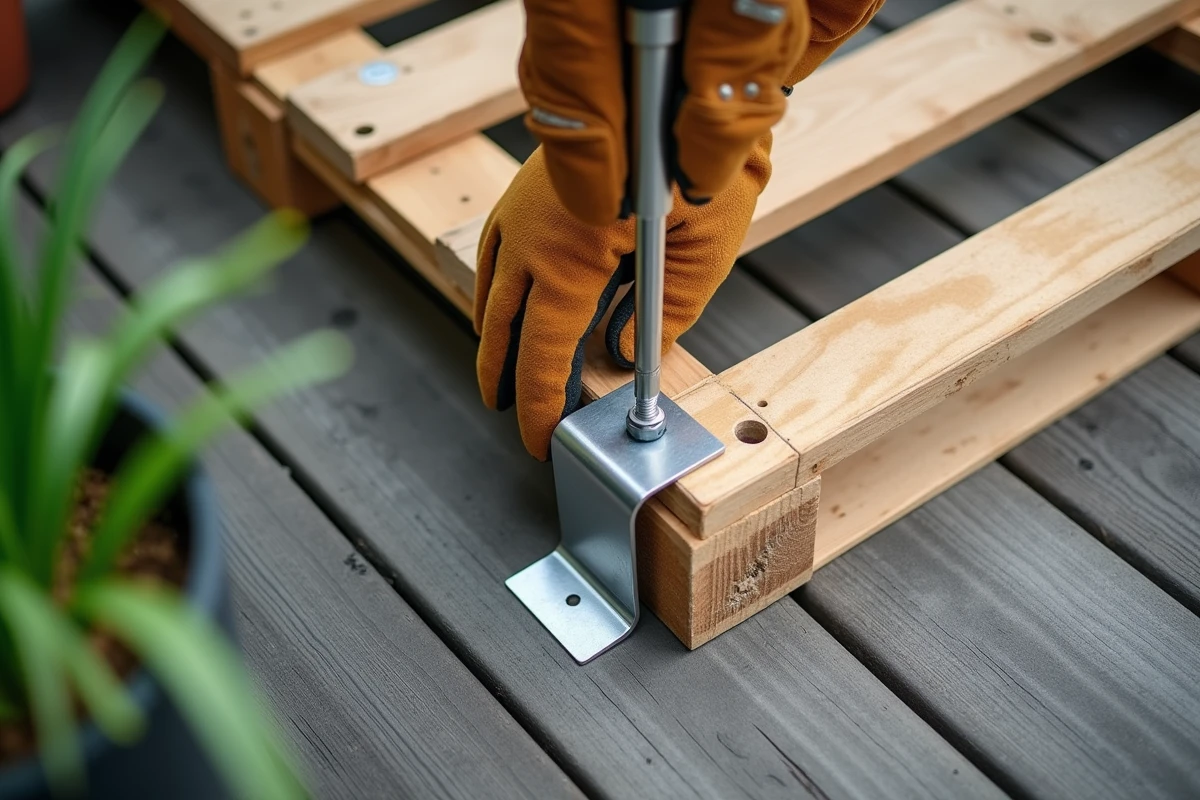
On sloped or uneven terrain, leveling with adjustable polypropylene wedges is preferable to wooden wedges, which deform under load with moisture. Polymer wedges maintain their geometry and allow fine height adjustments, pallet by pallet.
A geotextile film placed between the ground and the pallets limits moisture rise and slows down vegetation growth. This is not just an aesthetic detail: without this barrier, the lower slats of the pallet degrade within one to two seasons.
Pallet wood treatment and prior declaration: two often overlooked points
Free recovered pallets are rarely treated for prolonged outdoor use. A minimum class 3 autoclave treatment is necessary for outdoor contact without direct contact with the ground. In contact with the soil, class 4 wood is required. Applying a saturator or stain to an untreated pallet does not replace deep treatment.
Also check the marking of the pallet. Pallets stamped HT (heat treatment) are safe. Those marked MB (methyl bromide) have been banned in Europe for several years but still circulate in the second-hand market.
On the regulatory side, the PLU 2025 ordinance now requires a prior declaration for any pallet structure exceeding 5 m² in urban areas. A terrace made of six standard pallets easily exceeds this threshold. The absence of a declaration exposes one to forced compliance.
Fixing pallets to the ground relies on a triptych: nature of the support, choice of anchoring, and wood preparation. A mistake in any of these three parameters compromises the stability of the whole, even if the other two are correctly addressed. Take the time to diagnose your ground before drilling anything.