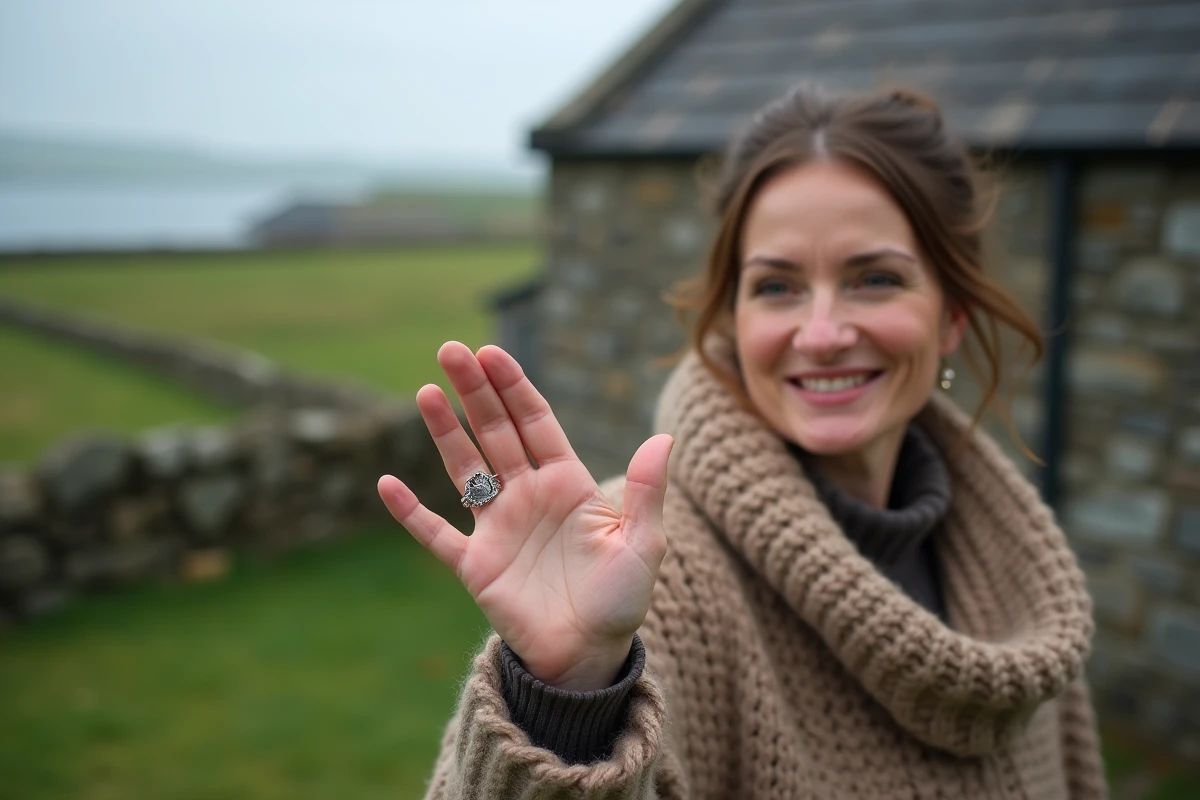
A simple gesture can change centuries of tradition. In Ireland, the way a ring is worn on the ring finger, whether on the right hand or the left hand, tells a different story. The Claddagh ring, seemingly discreet at first glance, reflects the state of the heart, commitment, or deep friendship, depending on the chosen meaning. Behind this seemingly wise piece of jewelry lies a vivid memory, woven over several generations. Some Irish households continue to pass down the Claddagh ring, jealously, as one would entrust a secret or a promise. This symbol has lost none of its strength over time. Customs vary by region, but everywhere, the ring nurtures the attachment to a Celtic culture that is as proud as it is vibrant.
An Irish symbol steeped in history: the origins of the Claddagh ring
It all begins on the Atlantic coast in the 17th century, where Richard Joyce’s fate takes an unexpected turn. Kidnapped by pirates and exiled far from Galway, he learns the craft of goldsmithing in a foreign land. The legend remembers a piece of jewelry, the result of years of patience and nostalgia: the Claddagh ring, secretly forged with thoughts of the one he left behind. Upon returning home after many years, he offers this symbol of attachment, adorned with two hands supporting a crowned heart, to his rekindled love. Soon, the story of the Claddagh is enriched with other tenacious tales, such as that of Margaret Joyce and the dynasty of artisans Thomas Dillon, intertwining faith, perseverance, and gestures passed down with respect. These rings withstand the test of time and uprooting. Even today, they embody the invisible thread connecting Ireland to those who carry it in their hearts.
To discover the details of the legends and origins of this piece of jewelry, read the history of the Claddagh ring.
What do the heart, hands, and crown mean? Decoding the symbolism of the Claddagh ring
The Claddagh is never displayed randomly: each motif tells a precious facet. To understand its full significance, here is what its three elements symbolize:
- Two hands
- A heart
- A crown
Behind this trio lie several dimensions of connection:
- The heart signifies deep attachment, whether it be love or unalterable friendship. For families who have crossed oceans, it remains a reminder of origins and a proudly claimed belonging.
- The hands embody trust, loyalty, and commitment woven through everyday gestures.
- The crown evokes fidelity, the nobility granted to a promise made, and the idea of respect without artifice.
The Claddagh is therefore not just a simple accessory or a folkloric souvenir. To give it is to convey a story and seal values that endure, even when everything around changes.
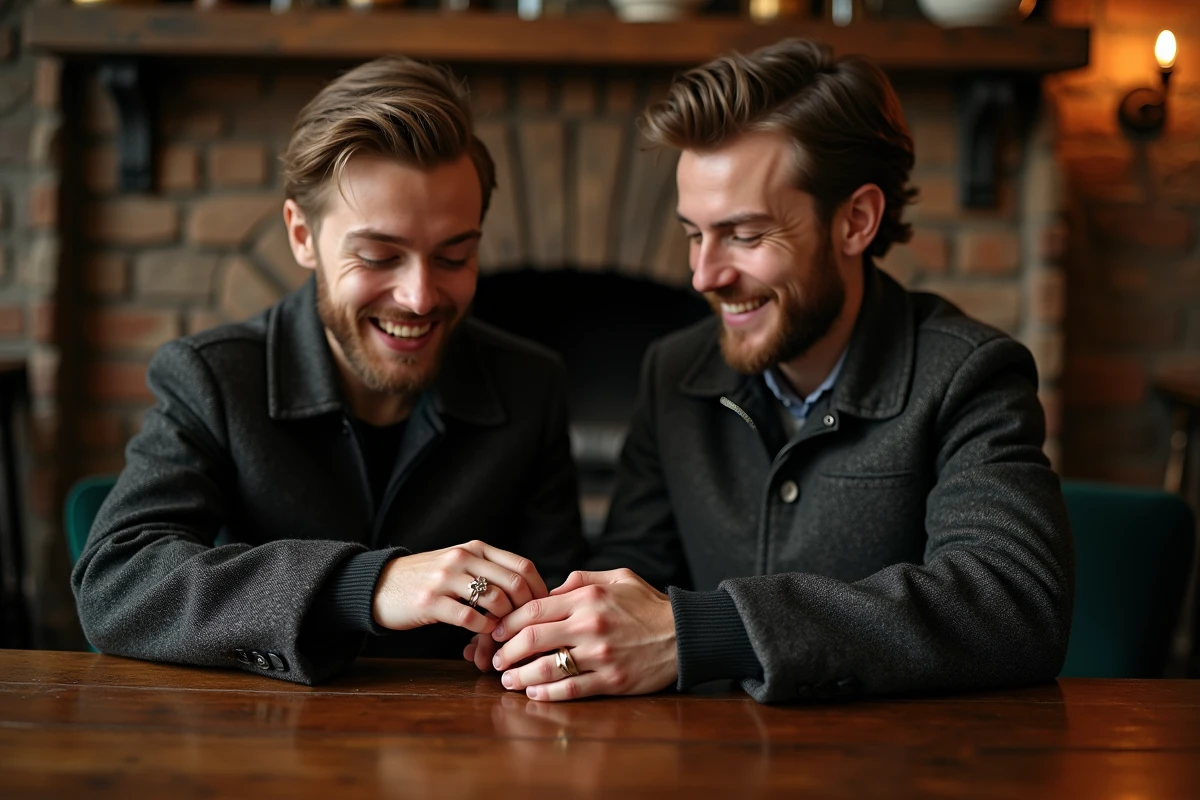
Traditions, ways to wear, and models: how the Claddagh ring fits into today’s life
The Claddagh ring crosses regions and oceans, adopting multiple uses. Here are, according to local or family customs, the most common ways to wear it:
- On the right hand, heart facing the nail: the heart remains free, without specific commitment.
- On the right hand, heart turned towards the palm: a story begins, but everything remains open for the future.
- On the left hand, heart towards the nail: the intention to get engaged, to build a future together, is discreetly displayed.
- On the left hand, heart against the palm: the union is confirmed, giving way to certainty and public commitment.
Gold or silver, sometimes set with stones, the Claddagh is passed down, received, or given to mark a transition, a milestone, a continuous bond. Families each perpetuate their preferences, but the act of giving the ring retains its meaning: it is a way to carry Ireland everywhere, even into dispersed lives.
Whether the ring lies dormant in a box or shines in plain view, it embodies this silent vow, solid as a promise that is not forgotten. It is found from one generation to the next, a faithful witness where so many traces otherwise fade. It transcends time, discreet yet unshakeable, as tenacious as the light on the moor after the rain.