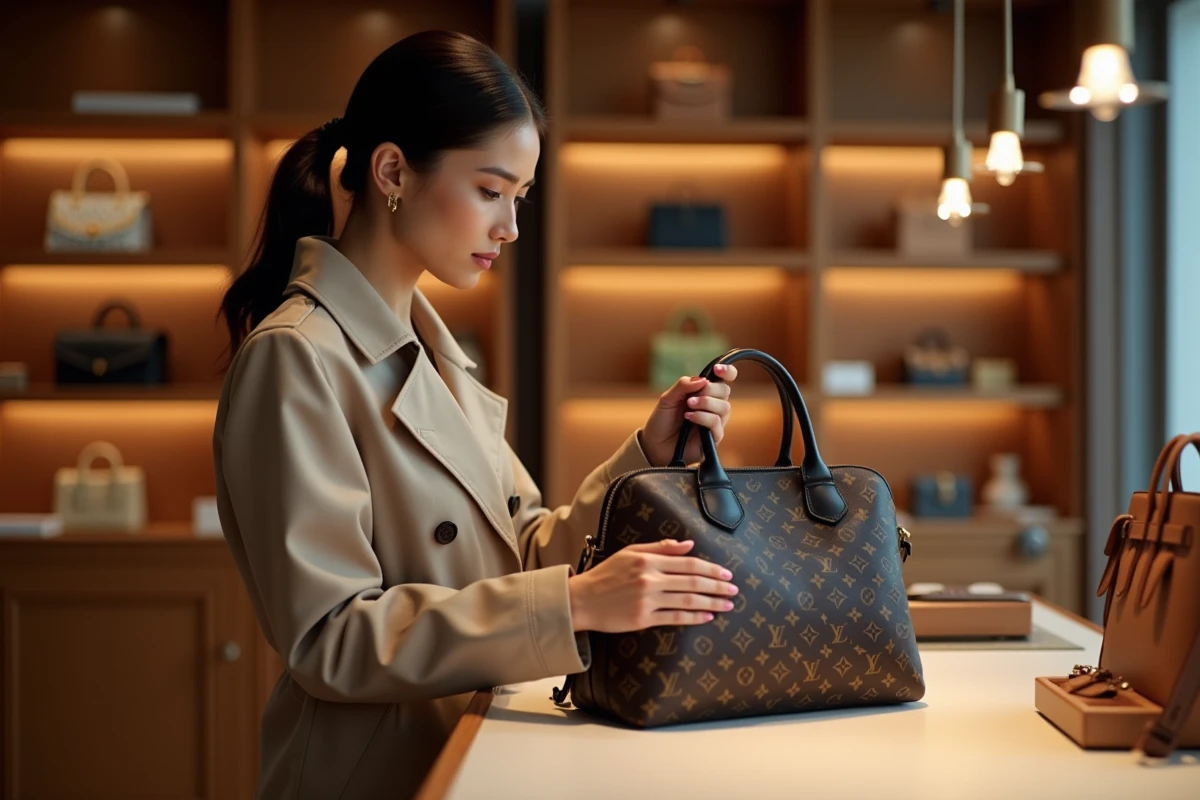
Louis Vuitton is not just a jewel in the LVMH crown: the brand stands as the true framework of the edifice. It alone generates nearly half of the revenue in the Fashion and Leather Goods sector and weighs even heavier in the profit distribution, claiming over 50% of the group’s results. In other words, Louis Vuitton not only drives growth, it occupies the center of the financial game of the world’s leading luxury brand.
Since 2019, Louis Vuitton’s trajectory has been surprising even industry strategists: the house’s dynamics consistently exceed forecasts, amidst a global battle and despite repeated economic setbacks. This sustained pace forces LVMH to rethink its approach to diversification. The entire house’s balance sometimes trembles under the weight of Vuitton’s performance, as this pillar becomes the anchor point for the whole.
Organization of the LVMH Group and Financial Balances: Analysis
Behind the scenes, LVMH relies on a structure divided into several families: fashion and leather goods, wines and spirits, fragrances and cosmetics, watches and jewelry, selective distribution. Each of these universes brings its strength, contributing to the collective prestige. Under the leadership of Bernard Arnault, the structure ensures the coexistence of the autonomy of the houses and the coherence of the group, to maintain the authenticity of each entity.
LVMH boasts over 79 billion euros in consolidated revenue, reaching new profitability peaks every year. This strength translates concretely: the group operates on all continents, with Europe, Asia, and the Americas (North and South) ensuring the bulk of the flows. The recipe? A strategy that combines acquisitions, synergies, and the ability to blend heritage with innovation. However, the sectoral distribution reveals a significant disparity: the fashion and leather goods division concentrates more than half of the operational profits, placing it far ahead of the other pillars.
In this precision mechanism, Louis Vuitton plays a decisive role. Who bears the real weight on the scales? To lift the doubt on this thorny question and measure the house’s influence on the edifice, one only needs to consult the revenue of Louis Vuitton at LVMH.
The equation is not limited to “who earns the most?”: the expectations are clear, preserve the financial lead without undermining overall solidity. At the same time, teams closely monitor the performance of each division, adjust distribution strategies, and are already preparing for the next shifts in the sector.
Louis Vuitton: The Concrete Share in LVMH’s Overall Revenue
It is impossible to ignore the place occupied by Louis Vuitton in the LVMH galaxy. In terms of revenue, the brand exceeds 19 billion euros annually according to the latest estimates, which represents up to 20% of the group’s global sales. Given the number of houses and the range of sectors, this performance is exceptional and places the brand far ahead of its internal competitors.
To clarify this power dynamic, the fashion and leather goods division (which also includes Dior, Fendi, or Loewe) totals over 38.6 billion euros out of the approximately 79.2 billion euros recorded in 2022. Again, the reality of the figures leaves little room for doubt: the largest portion of this pie goes to Vuitton. By surpassing the 15 billion euros mark in operating profit in this division, the group demonstrates a rare profitability, seldom matched in the international luxury landscape.
What truly distinguishes Louis Vuitton? The ability to maintain strong growth, to reinvent its collections without ever tarnishing its prestigious image. Year after year, the house continues to be the pillar that secures the success of the entire LVMH and outlines the guiding lines of the sector.
Influence, Diversification, Soft Power: How LVMH Orchestrates Its Leadership
To grasp the scope of the group, it is better to observe how LVMH blends innovations, expertise, and expansions. Its strategy? To multiply the poles, certainly, but to organize everything so that Louis Vuitton irrigates the fashion and leather goods sector and sets the tempo for the entire portfolio. Opposite it, a constellation of brands: wines and spirits, fragrances, cosmetics, watches, and jewelry, supported by a broad network of selective distribution. Each branch, each house nourishes the whole while preserving its color.
This dense network offers LVMH a unique striking force. The group’s soft power is displayed through the notoriety of its brands and an extraordinary marketing power. LVMH knows how to influence the sector, impose trends, and manage its networks on a global scale. Its rigorous management of resources, traceability, sourcing, and rational use of water, shows a clear willingness to integrate ecological issues into economic performance.
Far from stopping at stock market success, the giant cultivates its ability to attract and retain the best talents. Its institute of excellence trades crystallizes this commitment: to transmit, train, defend innovation, and protect know-how, generation after generation. Here, excellence and creativity form a winning duo, placing LVMH at the heart of the ambitions of the luxury planet, and beyond, fueling economic activity across several continents.
In the discreet ambiance of the workshops or under the spotlight of the catwalks, LVMH sets the bar high. History is written this way, where one name, Louis Vuitton, plays the master note of a score calibrated to last, inspire, and constantly redefine the boundaries of global luxury.