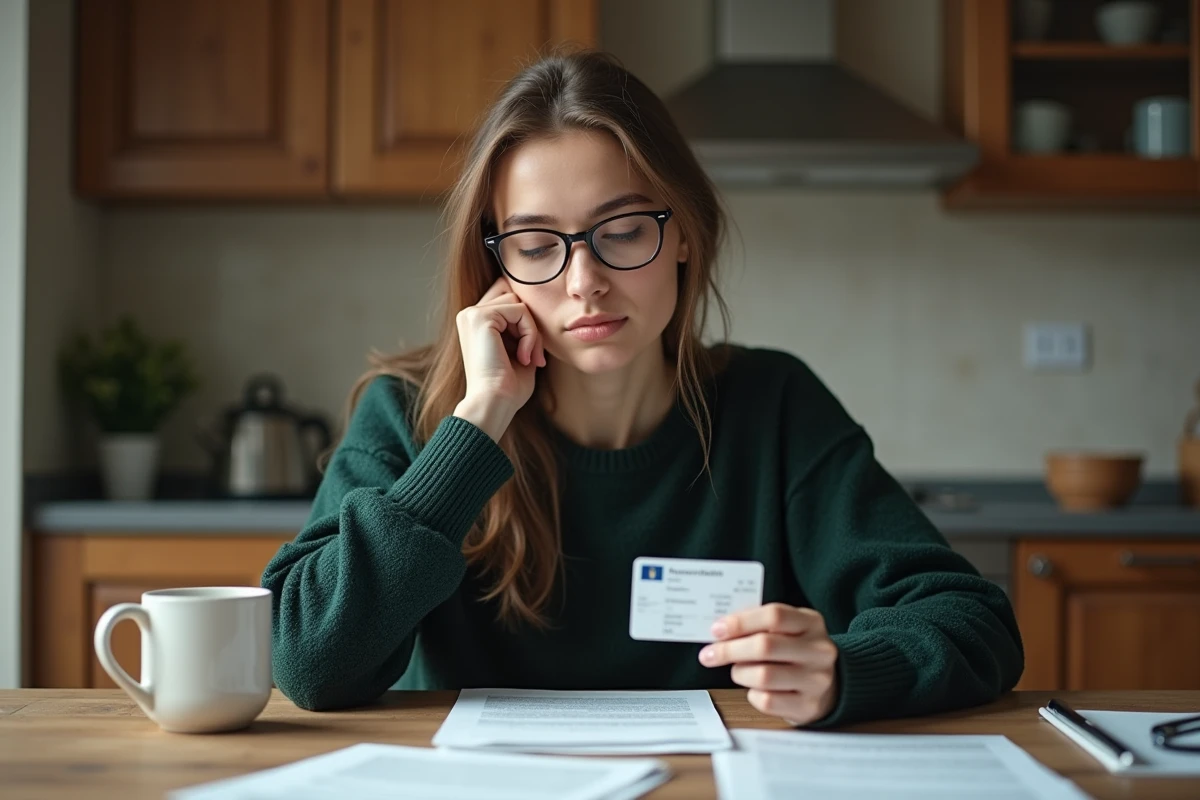
Mentioning your address on your identity card is a stubborn reflex, even though no law explicitly requires it. However, an outdated address or a forgotten update can derail your entire administrative file. Public services systematically demand an address that perfectly matches your supporting documents. According to the prefecture, flexibility varies, but the requirement remains the same: align your addresses to avoid unnecessary blockages and delays.
Changing your address on the identity card: maintaining consistency
Having multiple addresses scattered across your official documents opens the door to hassles: suspended files, unexpected reminders, endless checks… Even though there is no formal obligation to update the address on the national identity card after a move, the slightest inconsistency can be enough to jam the administrative machine.
To protect yourself from these troubles, it’s better to carefully prepare the documents required when applying at the town hall. Generally, remember to gather:
- a recent proof of residence accepted by the administration;
- your identity card, still valid;
- a passport photo in the required format;
- the form filled out correctly.
Particular situations, such as shared housing, alternating residence, or staying with a relative, can sometimes bring their share of complications. In these cases, referring directly to the advice on the address to indicate can save you valuable time and avoid unnecessary back-and-forths.
Changing the address on the identity card does not automatically update all your other files. Nothing is centralized: each administration must be notified separately. Taking a moment to adjust all your main documents is the best way to avoid mishaps:
- vehicle registration
- driver’s license
- all documents related to your household
An overlooked address can cause mail to bounce back, an appointment to be lost, or a notification to go in the wrong direction. Aligning each proof reduces the risks of blockage or prolonged procedures significantly.
Change procedure: don’t overlook anything
When the time comes to change your address, it’s important to be vigilant. Here’s what you must check before any procedure at the town hall:
- a recent proof, clearly in your name;
- valid identity card;
- recent photo, in the correct size.
The slightest oversight or imprecise detail, such as a spelling mistake, missing street number, or incorrect postal code, and everything starts over from scratch. Agents examine each element to avoid any flaw that could delay your request for months.
Smart tip: use Service-public.fr to notify multiple organizations at once. This service allows you to inform entities such as:
- tax administration
- CAF
- CPAM
- Pôle emploi
- pension funds
- energy suppliers
- vehicle registration management
A coordination that limits the risk of missing a payment, having a crucial letter disappear, or having to chase after supporting documents.
Check each administrative contact
- The proofs, whether paper or digital, are updated;
- The forms are proofread, nothing is overlooked;
- Everything meets the format requirements;
- Your bank, your insurer, and educational institutions have received the new address.
Don’t underestimate the chain of small organizations, operators, apps, banks, delivery platforms, which, at the slightest deviation, can block a payment or misplace a package. If you are staying with someone, explain the situation frankly to the agent at the counter; a complete and transparent file often helps to unblock the process much faster than one might think.

Correct address: pay attention to details
Writing an address that poses no problems, both on paper and online, requires more attention than one might think. The rules of AFNOR and the Universal Postal Union (UPU) are simple to remember but do not tolerate approximations well. To ensure your documents are never blocked:
- Write each line in uppercase, without strange abbreviations
- Avoid special characters or accents, unless strictly necessary
- Use only the abbreviations recognized by the administration
Reversing the order of lines, forgetting a number, or truncating the name often opens the door to avoidable complications. Stay rigorous: one number per line, then the name of the street, followed by the postal code, and finally the municipality clearly highlighted. Readability and validity guaranteed.
To limit unpleasant surprises, rely on reliable tools: service-public.fr for regulations, La Poste to test the postal validity of an address, Filigrane.beta.gouv.fr to submit a digitized proof in proper form. Specify each time the purpose of the document (“copy provided for…”), this eliminates any ambiguity during the processing of your files.
Keep these practices in mind and you will avoid the “trap address” effect:
- Always write in uppercase
- Get to the point: no excessive punctuation, no unnecessary accents
- One element per line for a clear address everywhere, on screen and on paper
- Carefully proofread the postal code and municipality
A well-mastered detail simplifies the entire administrative process. Queues shorten, mail arrives without detours, and every notification hits its target on the first try. The correct address is ultimately the best open door to a smooth administrative life.